 ultimate-guide
Authentic St Croix Vintage Apparel: A Buyer's Guide
Table of Contents
- What Makes Authentic St Croix Vintage Apparel Worth Collecting
- How to Identify Vintage T-Shirts from the Island
- St Croix U.S. Virgin Islands Shirts: Styles and Necklines
- Vintage St Croix T-Shirts: Materials, Colors, and Patterns
- Sizing, Fit, and Condition Grading Across Eras
- Authenticating and Dating Your Vintage Pieces
- Care, Storage, and Repair for Vintage Knitwear
- Where to Shop and What to Expect from Authentic Sellers
- Frequently Asked Questions
Last Updated: October 19, 2026
What Makes Authentic St Croix Vintage Apparel Worth Collecting
Authentic St Croix vintage apparel is a tangible connection to island history and culture. When you buy a genuine piece, you're acquiring Caribbean heritage told through design, construction, and cultural significance.
Its appeal has grown among former residents, tourists, and collectors who know the difference between mass-produced imitations and genuine pieces. Life in the Left Lane has been part of this movement since 1981, offering curated apparel featuring trademarked designs and local artwork.
What separates authentic vintage from knockoffs comes down to several factors: the era in which the piece was made, the manufacturing details visible in tags and stitching, the authenticity of the graphic designs themselves, and the quality of materials used. According to the Smithsonian's guide to textile authentication, vintage clothing authentication relies heavily on examining construction methods, label placement, and material composition, all markers that have evolved significantly over decades.
Collectors and gift-givers value authentic pieces because they represent genuine island culture, backed by real history embedded in each garment.
How to Identify Vintage T-Shirts from the Island
Identifying authentic vintage T-shirts from St. Croix means examining tag construction, label placement, fabric composition, and the graphics themselves.
Checking Tags, Labels, and Manufacturing Details
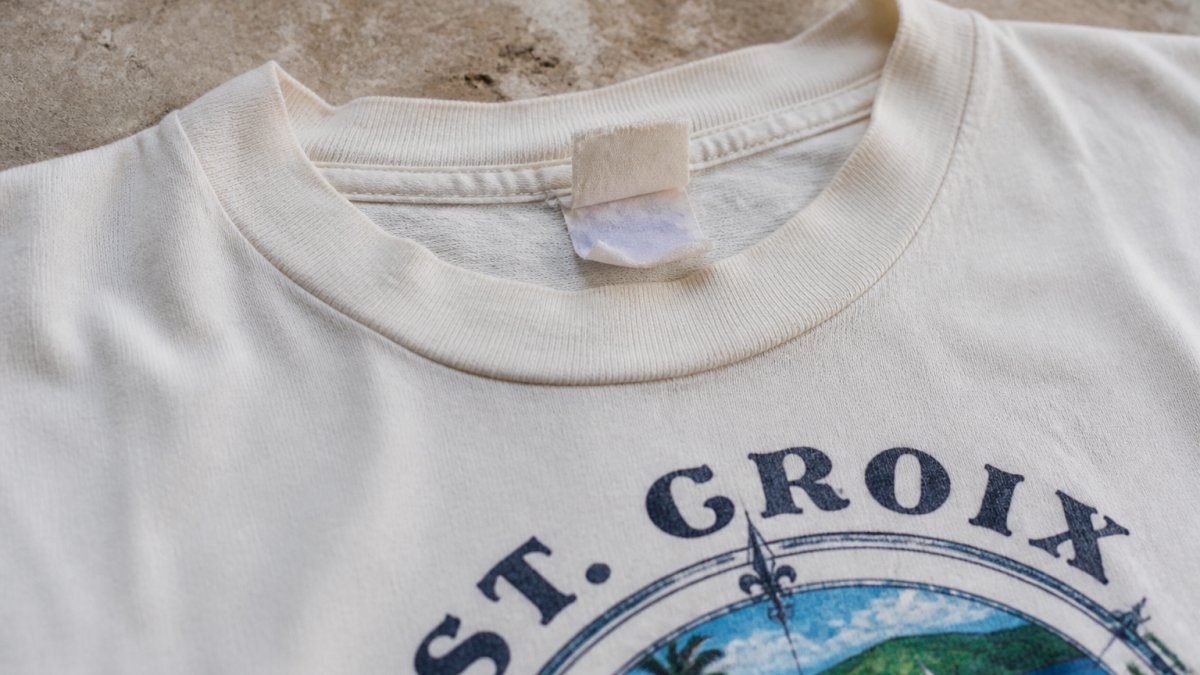
The tag tells when and where a shirt was made. Authentic 1980s and 1990s pieces differ from modern reproductions. Single-stitch construction, where panels are sewn with one continuous thread rather than a double-stitched seam, is a hallmark of genuine vintage apparel from this era.
Look for tags with natural fading rather than artificial distressing, positioned and formatted to the manufacturing standards of their decade. Stitching should appear slightly irregular, with thread tension variations suggesting hand-guided rather than computer-controlled sewing.
Care labels help too: pre-1990s garments often show outdated terminology and formatting reflecting that era's regulations.
Spotting Authentic Island-Inspired Design Elements
Genuine St. Croix vintage apparel features design elements reflecting island culture, local landmarks, and US Virgin Islands history, often incorporating beaches, local businesses, charities, or cultural symbols relevant to the piece's era.
Authentic designs show period-consistent printing. 1980s and 1990s screen-printed graphics have slightly raised ink, specific color limitations, and natural cracking and fading that correspond to decades of wear and washing.
Counterfeits often combine references from different eras: a shirt claiming to be from 1985 shouldn't feature cultural references that didn't exist until 2005.
St Croix U.S. Virgin Islands Shirts: Styles and Necklines
Authentic St Croix U.S. Virgin Islands shirts span eras and purposes, from casual tourist wear to charity commemoratives. Knowing the style variations helps you identify genuine pieces.
Classic Crew Necks and V-Necks
Crew necks are the most common style of authentic St. Croix vintage apparel from the tourist and souvenir market, with bold graphics celebrating island life, local businesses, or the natural beauty of the US Virgin Islands. The style stayed consistent across decades, though rib construction and neckline binding evolved.
V-necks appeared more in the 1990s and 2000s, with the same construction markers: single-stitch bodies, screen-printed graphics, and natural aging patterns.
Both styles should feel substantial, reflecting the heavier cotton blends of vintage production; modern lightweight reproductions feel noticeably different in hand.
Cardigans, Quarter-Zips, and Knitwear
Knitwear is a premium category of St. Croix vintage apparel, with intricate construction and higher-quality materials. Cardigans and quarter-zips were produced in smaller quantities than T-shirts, making authentic examples more collectible.
Authentic vintage knitwear often features island-inspired patterns, geometric designs, colorblock sections, or graphics woven into the knit. Genuine pieces show tight, even stitching and no irregularities or dropped stitches.
Look for natural fibers: wool blends, cotton-heavy compositions, or cashmere for premium pieces. Authentic vintage knitwear's weight and drape differ from modern synthetic blends that feel slick.
Vintage St Croix T-Shirts: Materials, Colors, and Patterns
Material composition and visual design reveal both the manufacturing standards of the era and the cultural aesthetic, helping you distinguish genuine pieces from mass-produced imitations.
Fabric Quality and Construction
Authentic vintage St. Croix apparel typically used 100% cotton or cotton-heavy blends that aged distinctively. Genuine fabric weight feels substantial, usually 5.5 to 6.1 ounces per square yard, versus lighter modern budget reproductions.
Authentic vintage cotton shows natural character: slight pilling, color variations, and uneven dye absorption indicate genuine age rather than artificial distressing. Single-ply thread creates a softer hand-feel than modern double-ply alternatives.
Examine the seams: authentic vintage pieces show slight variations in stitch length and tension, while modern reproductions look suspiciously uniform.
Colorblock, Geometric, and Island-Inspired Graphics
St. Croix graphic design reflected both tourist appeal and genuine cultural celebration. Colorblock designs, with distinct color sections creating bold visual impact, were popular in the 1980s and 1990s.
Geometric patterns incorporated tropical flora, ocean waves, or abstract Caribbean landscapes, in vibrant hues like turquoise, coral, lime green, and deep purple.
Authentic vintage graphics show era-specific screen-printing: ink sits on the fabric surface, creating a slightly raised texture that cracks naturally over time. Counterfeits embed ink too deeply into synthetic blends or apply it too thinly to match genuine vintage work.
Sizing, Fit, and Condition Grading Across Eras
Vintage sizing differs significantly from modern standards, and condition grading provides a standardized language for evaluating wear and damage.
Understanding Vintage Sizing Standards
A shirt labeled "Large" from the 1980s often fits smaller than a modern Large, with narrower shoulders, shorter sleeves, and less volume through the body.
Vintage chest measurements run one to two sizes smaller: a vintage XL might measure 20-21 inches pit to pit, versus 21-22 inches modern. Sleeves tend to be proportionally shorter too.
Always measure before purchasing: lay the shirt flat and measure seam to seam across the chest, shoulder seam to cuff, and collar base to hem. Compare to garments you wear comfortably; even within one brand and year, same-size pieces can vary noticeably.
Evaluating Condition: Wear, Fading, and Damage
Condition grading uses a standardized scale. Mint pieces show no visible wear, tags attached, crisp graphics, pristine fabric; they're rare and command premium prices.
Near-mint allows minimal wear: slight graphic fading, minor pilling, or tag creasing. Excellent pieces show light wear, moderate graphic fading, slight pilling, but no holes, stains, or structural damage.
Good garments show obvious wear, noticeable graphic fading, pilling, possibly minor staining, but remain wearable. Fair items show heavy fading or partial graphic loss, pilling, staining, or small holes. Poor pieces are heavily worn but may retain collector or repair value.
| Condition Grade | Graphic Appearance | Fabric Condition | Wearability | Typical Price Range |
|---|---|---|---|---|
| Mint | Crisp, vibrant | No pilling, pristine | Display only | Premium |
| Near-Mint | Slight fading | Minimal pilling | Display/light wear | High |
| Excellent | Light fading | Light pilling | Wearable | Moderate-High |
| Good | Moderate fading | Obvious pilling | Wearable | Moderate |
| Fair | Heavy fading | Significant wear | Limited wear | Lower |
| Poor | Partial loss | Substantial damage | Restoration project | Low |
Watch for staining and odor: water stains, mildew, or smoke odor signal storage issues affecting longevity. Small holes can be professionally repaired, but factor large tears into your decision.
Authenticating and Dating Your Vintage Pieces
Dating a vintage piece requires examining multiple factors at once. No single indicator is definitive, but tag style, manufacturing technique, graphic design, and material composition together create a reliable timeline.
Brand History and Garment-Era Identification
St. Croix apparel production evolved through distinct eras. The earliest tourist-market pieces from the 1970s and early 1980s featured simple designs, limited color palettes, and basic screen-printing.
The 1980s and 1990s were the peak of St. Croix souvenir apparel production, as US Virgin Islands tourism surged. This era brought sophisticated graphics, expanded color use, and improved printing; tags often show manufacturer names or union labels that pinpoint timing.
The 2000s brought digital printing and manufacturing shifts: graphics became more detailed, but construction moved away from single-stitch standards, producing different aging patterns than 1980s and 1990s pieces.
Life in the Left Lane offers pieces that reflect how St. Croix apparel design evolved.
Red Flags for Counterfeit or Mass-Produced Imitations
Counterfeits of authentic St Croix vintage apparel show telltale markers.
Printing inconsistencies suggest modern production: digital printing that looks too crisp and uniform, or ink sitting flat without screen-printing's dimensional quality.
Tags offer immediate verification: counterfeits often place tags in non-standard locations, use modern materials or fonts, or format tag information to current rather than era-appropriate regulations.
Material mismatches are another warning sign: a shirt claiming 1982 shouldn't contain synthetic blends unavailable until the 1990s, or compositions obsolete decades before the claimed date.
Graphic anachronisms, references to businesses that didn't exist in the claimed era, or modern design styles, indicate a misdated or counterfeit piece.
Care, Storage, and Repair for Vintage Knitwear
Preserving authentic St Croix vintage apparel requires understanding how these pieces age. Proper care extends their life and maintains value.
Hand-wash in cool water with mild detergent for delicates. Avoid bleach, which accelerates fading and weakens fibers.
Never use a dryer, heat sets stains permanently and weakens fibers. Lay pieces flat or hang on a padded hanger in shade; air-drying preserves fabric integrity far better.
Store in a cool, dry environment away from sunlight, which fades graphics and weakens fibers.
Small holes can be professionally patched with matching fabric and loose seams re-stitched, but extensive repairs may compromise authenticity and value, consult a vintage textile restoration professional first.
Where to Shop and What to Expect from Authentic Sellers
Finding authentic St Croix vintage apparel requires knowing what distinguishes reputable sellers: detailed condition descriptions, accurate dating, and clear photographs of construction details.
Look for sellers specializing in vintage Caribbean or island-themed merchandise; their expertise means more accurate authentication and fair pricing.
Life in the Left Lane offers curated apparel celebrating the island's culture.
Ask any vintage seller about sourcing methods, authentication process, and return policy.
According to the Vintage Fashion Guild's authentication standards, reputable dealers maintain transparent communication about condition, provide accurate descriptions with multiple photographs, and stand behind their merchandise.
Pricing reflects authenticity, condition, and rarity: mint or near-mint pieces command premiums, worn pieces cost less.
Finding authentic St Croix vintage apparel connects you to island history in a way mass-produced imitations cannot.
Frequently Asked Questions
How can you tell if a St. Croix shirt is vintage?
Authentic vintage St Croix shirts show specific markers: single-stitch construction (pre-1990s), faded tag printing, and era-appropriate label placement. Check the tag for a manufacturer name and country of origin, genuine pieces often list USA or Caribbean production. Look for natural fading patterns that develop over decades, not uniform bleaching. Graphic designs should show slight cracking or fading that's consistent with age. If the tag is pristine and the shirt feels stiff, it's likely new merchandise marketed as vintage.
What's the difference between St. Croix shirts and U.S. Virgin Islands shirts?
St Croix U.S. Virgin Islands shirts are specifically designed for the island of St Croix, often featuring local landmarks, historical logos, or island-specific cultural references. Generic U.S. Virgin Islands apparel covers all three main islands (St Croix, St John, St Thomas) with broader Caribbean imagery. Authentic St Croix pieces reference the island's unique heritage, local businesses from the 1980s-2000s, or trademarked designs tied to the island's history. Check the design details and text on the shirt, St Croix-specific pieces name the island explicitly or feature recognizable local symbols.
What should I check before buying a vintage St. Croix T-shirt?
Examine the condition closely: look for stains, holes, or pilling that affects wearability. Check seams for integrity and elasticity for stretch. Verify the tag information matches the era you expect, font, label style, and material composition should align with genuine vintage pieces from that decade. Ask the seller for detailed photos of the tag, collar, and any graphic wear. Request information about the shirt's origin and previous ownership. Review the seller's return policy and buyer protection terms, especially if ordering online from a pre-owned marketplace.
How do you care for a vintage graphic T-shirt?
Wash in cold water inside-out using gentle detergent to preserve graphics and fabric. Avoid bleach and harsh chemicals. Air dry flat or hang to prevent shrinkage and graphic cracking. Store folded in a cool, dry place away from direct sunlight, which causes fading. For valuable pieces, consider hand-washing or dry cleaning. If the graphic shows cracking, avoid excessive stretching. Never tumble dry, heat damages both the fabric and printed designs. With proper care, vintage pieces retain their character and wearability for decades.